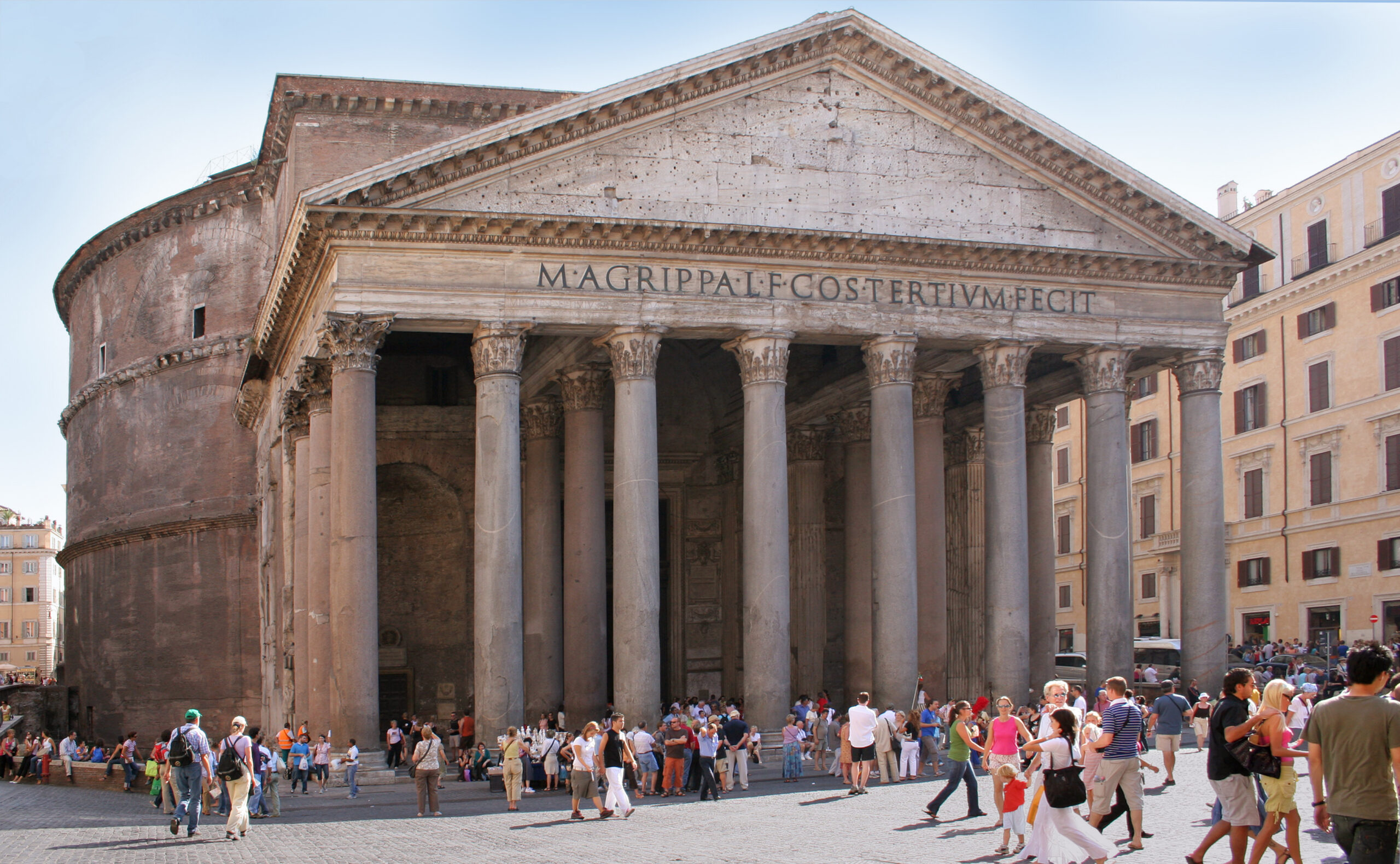
Roberta Dragan, Pantheon (Rome) - Front, 2006, Photograph. No changes made. CC BY 2.5
The first temple here was built in 27 BCE, but later burned down. Emperor Hadrian recommissioned the temple in 126 CE. The Pantheon was dedicated to all Roman gods. Its innovative design combines a traditional portico with a concrete rotunda crowned with a massive dome. The oculus opens to the sky symbolizing a connection between the earthly and the divine. The interior niches likely housed statues for the various gods shown with Roman Emperors.
Audio Description
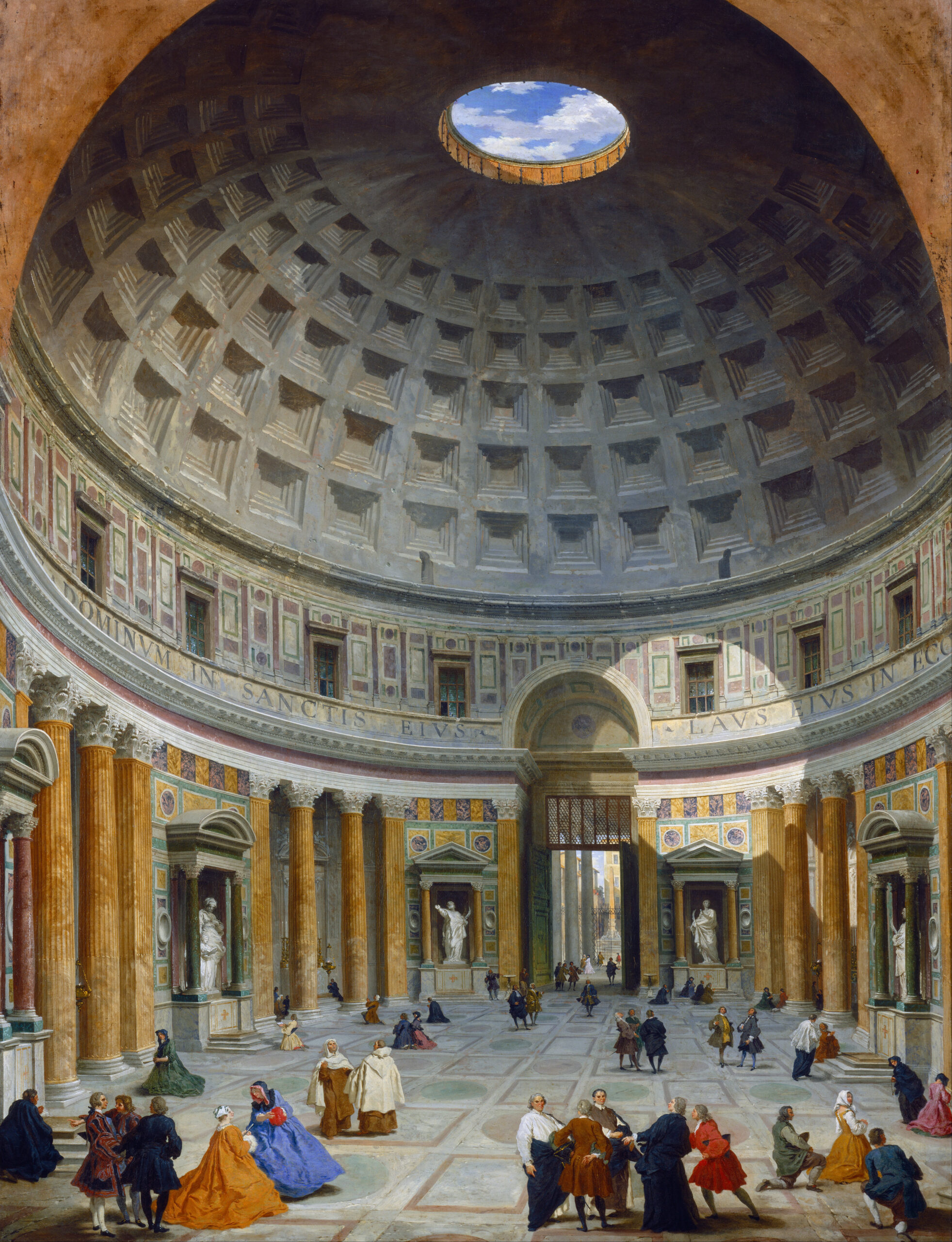
Giovanni Paolo Panini, Interior of the Pantheon Rome, Oil on canvas, 1280mm x 990mm,
National Gallery of Art, Washington D.C. Wikimedia Commons, public domain.
While the Pantheon has not changed much in design, the ideology has undergone a Christian transformation. In 609 CE, Pope Boniface IV consecrated the Pantheon as the Church of St. Mary and the Martyrs. The once pagan statues were replaced with Christian images. Many holy relics were buried beneath the new high altar. The building’s Christian transformation saved it from theft and destruction. It now serves as an important burial for many artists including Raphael.