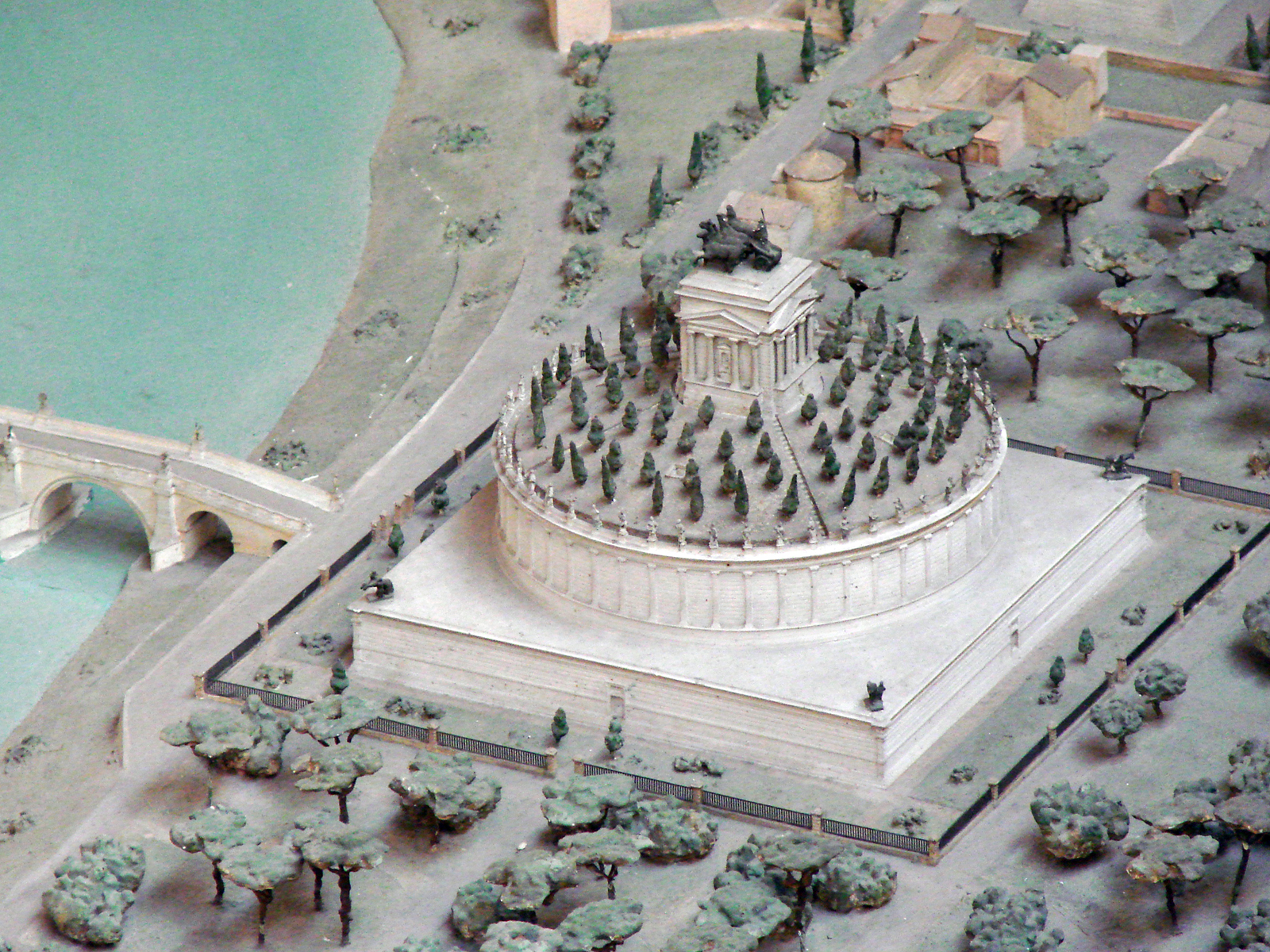
Jean-Pierre Dalbéra, Le mausolée d'Hadrien (132-139), 2011, Reconstruction Model. No changes made. CC BY 2.0
Originally commissioned in the 2nd century by Emperor Hadrian as a mausoleum for him and his family. Its cylindrical form sat atop a square base and possibly covered in greenery. Atop the building could have been a bronze statue of Emperor Hadrian. Positioned along the Tiber River, the massive structure symbolized imperial power.
Audio Description
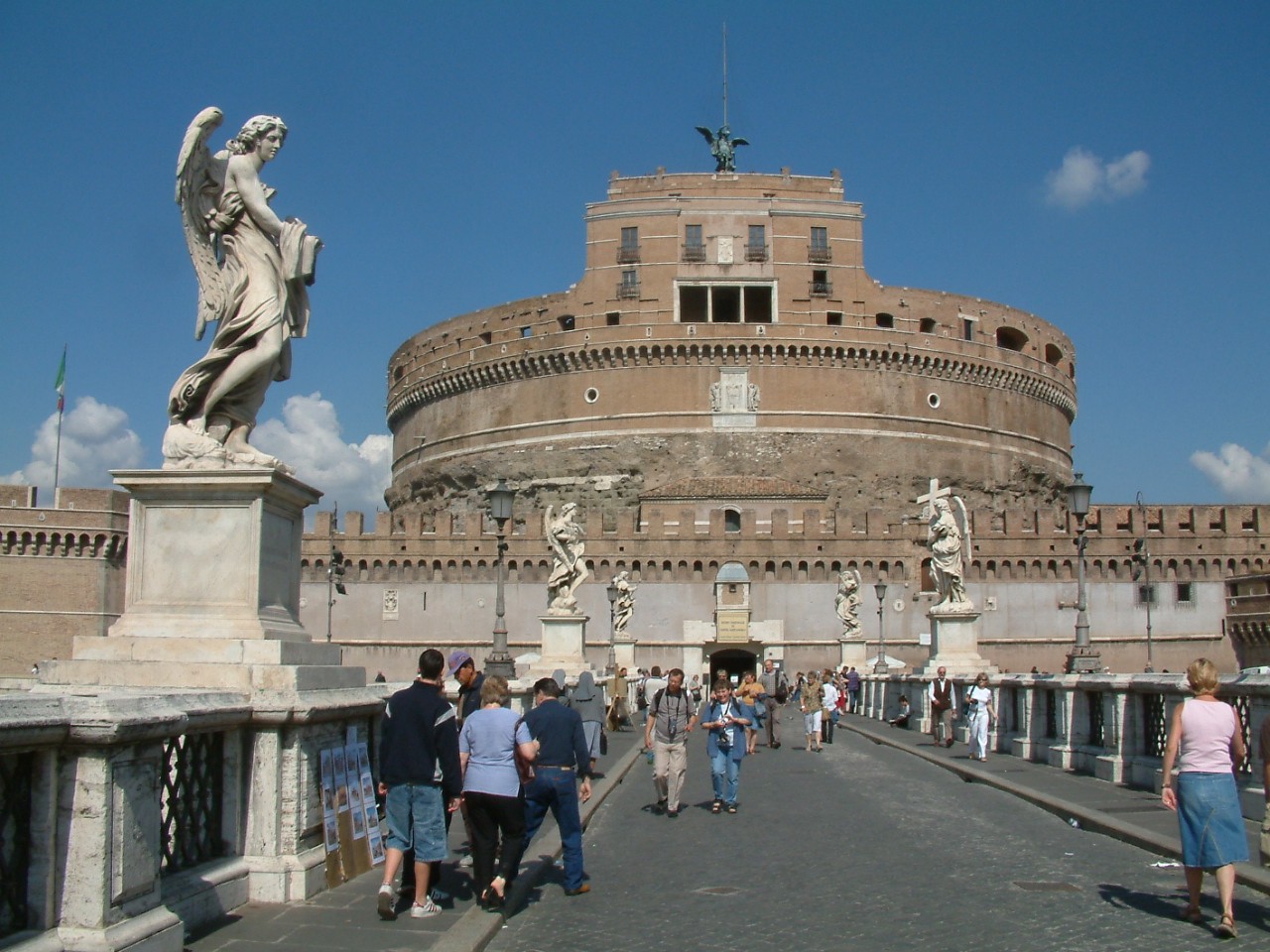
Radomil, Mauzoleum Hadriana, 2004, Photograph. No changes made. CC BY 3.0
During the Middle Ages, the mausoleum was transformed into a fortress and papal residence. The addition of battlements and defensive walls gave the structure a castle-like appearance. It gained religious significance after Pope Gregory I had a vision of the Archangel Michael atop the building, signaling the end of a plague. It was renamed Castel Sant’Angelo and became a military stronghold and later a museum.